 Relic Hunt
Systems
Gold and Trading: Earning Coins and Using Traders
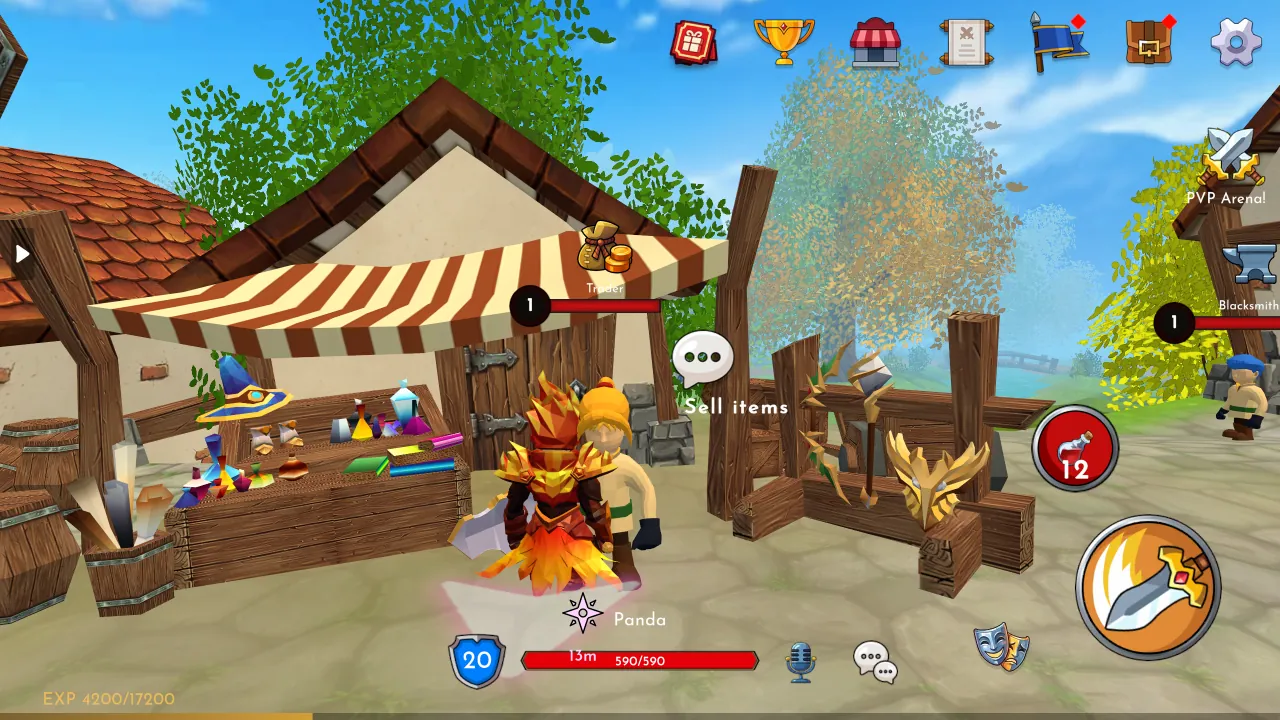
Gold is a physical item: the coins sit in your bag like any other loot. Monsters drop items, not coins, so most gold comes from selling loot to a Trader. The rest comes from daily rewards, the arena, quests and tasks.
Where gold comes from
Monster loot tables contain gear, potions, relics and junk, but no coins. These are the reliable sources:
- Selling loot to a Trader, your everyday income.
- Daily rewards: six days of the 28 day calendar pay coins, 55,000 gold in total, and the biggest single day is worth 15,000.
- Arena duels: 500 gold for a win and 50 for a loss.
- Tasks: many include gold, from 150 for Scrap Metal up to 8000 for the last step of the Dragon hunting chain. The final step of most hunting chains pays between 1100 and 3000.
- Quests from the people in the cities.
How a Trader prices an item
Every item has a value worked out from its stats. Its attributes, bonus health and mana, and the damage, healing or mana restore of its skill are added together. Rare items add a large flat bonus on top, and legendary items an even larger one. The result is multiplied by the number of items in the stack.
So a sharpened item sells for more than a fresh copy, because sharpening raises its numbers. Potions are priced by how much they heal or restore, times the stack. Junk has no stats, so it fetches only a token amount. Relics can't be sold, and coins themselves can't be traded.
Why other hunters' gear is on the shelf
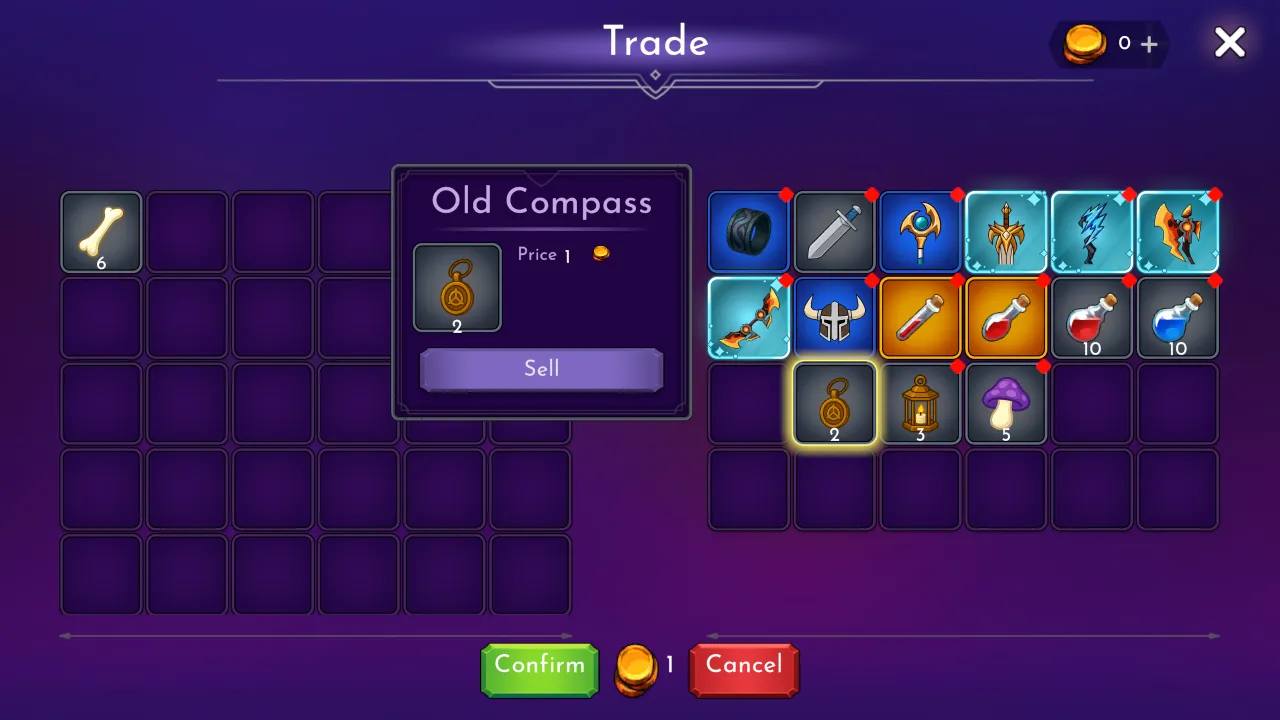
A Trader has no stock of its own. Its 48-slot shelf holds what hunters have sold to that Trader, and every player who visits sees the same shelf. Anything on it can be bought for exactly the price it was sold for. The Forest has two Traders and the Desert has one, each with its own shelf.
The shelf is cleared every ten minutes, except for items someone has in an open deal at that moment. That gives you a short window to buy back something you sold by mistake. It's also worth a glance whenever you pass: a stronger weapon sold by another hunter costs only its value in gold.
How a deal works
Buying and selling happen in one window and are settled together.
- Walk up to a Trader and press Sell items.
- Tap items in your bag to sell them and items on the shelf to buy them. Tap again to take an item back out of the deal.
- The total shows the gold you'll receive, or in red the gold you'll pay if you're buying more than you sell.
- Confirm to settle. If you can't cover a negative total, you'll see Not enough money.
- Closing the window without confirming, or traveling to another map, cancels the deal and returns every item to where it was.
- Gold from a sale goes into your bag. If the bag is full, the coins drop at your feet, so walk over them to pick them up.
Trading tasks
Four tasks in the Tasks window reward selling. They count items sold, so a stack of ten counts as ten. Buying doesn't count.
- First Merchant Trade, 1 item sold: 100 experience, 200 gold and a Rare Relic.
- Market Beginner, 5 sold: 250 experience, 500 gold and a Rare Relic.
- Regular Trader, 15 sold: 600 experience, 1000 gold and a Common Relic.
- Trade Tycoon, 40 sold: 1500 experience, 3000 gold and a Legendary Relic.
Sell, recycle or offer at the altar?
Three places in the city want your spare gear, and all three measure it by the same value. The Trader turns it into that many coins. The Recycler turns it into junk for sharpening, which matters if you plan to keep improving your gear. The altar turns it into points on the Junk Burned leaderboard. City quests that ask you to Sell items, Sell bones or Sell books are the one time handing junk to a Trader is worth it.
A simple rule works well. Sell potions and common gear you'll never use. Recycle equipment while the gear you wear still has sharpenings left. Keep spare rare and legendary pieces for the altar only if you're competing on the Burned board.