 Relic Hunt
Systems
Junk and Recycling: Materials for the Blacksmith
Most of what monsters drop is junk: books, bones, claws, lanterns and other leftovers with no stats of their own. A Trader pays next to nothing for it, but the Blacksmith needs junk to sharpen gear. The Recycler closes the loop by breaking equipment you have outgrown into more junk.
What counts as junk
There are fifteen kinds of junk: Old Book, Worn Book, Old Bone, Broken Branch, Dull Claw, Old Compass, Clay Cup, Glass Eye, Faded Feather, Ink Bottle, Rusty Lantern, Wild Mushroom, Dry Plant, Frayed Rope and Blank Scroll. Depending on the monster, junk makes up about 43 to 78 percent of all drops. Some monsters are a reliable source of one kind:
- Skeletons and Rat Assassins: Old Bones on roughly 78 percent of kills.
- Bats, Battle Bees, Crabs, Fish-men and Monster Plants: Old Books on about 42 percent of kills.
- Mimics: a Glass Eye on about 43 percent of kills.
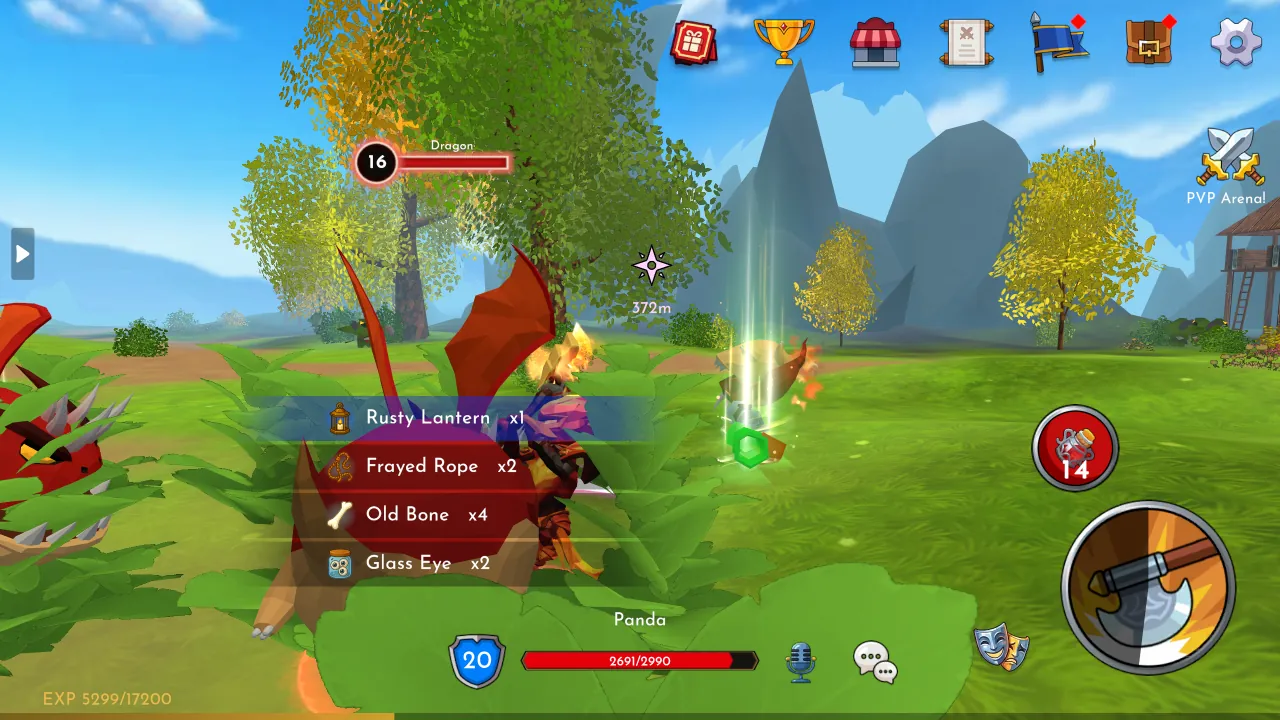
- Dragons: Dull Claws and Rusty Lanterns, each on about a quarter of kills.
- Cyclopes, Evil Mages and Naga Wizards: Blank Scrolls on about a quarter of kills.
- Blue Golems favour Worn Books and Old Compasses. Spiders favour Broken Branches, Dry Plants and Wild Mushrooms.
Using the Recycler
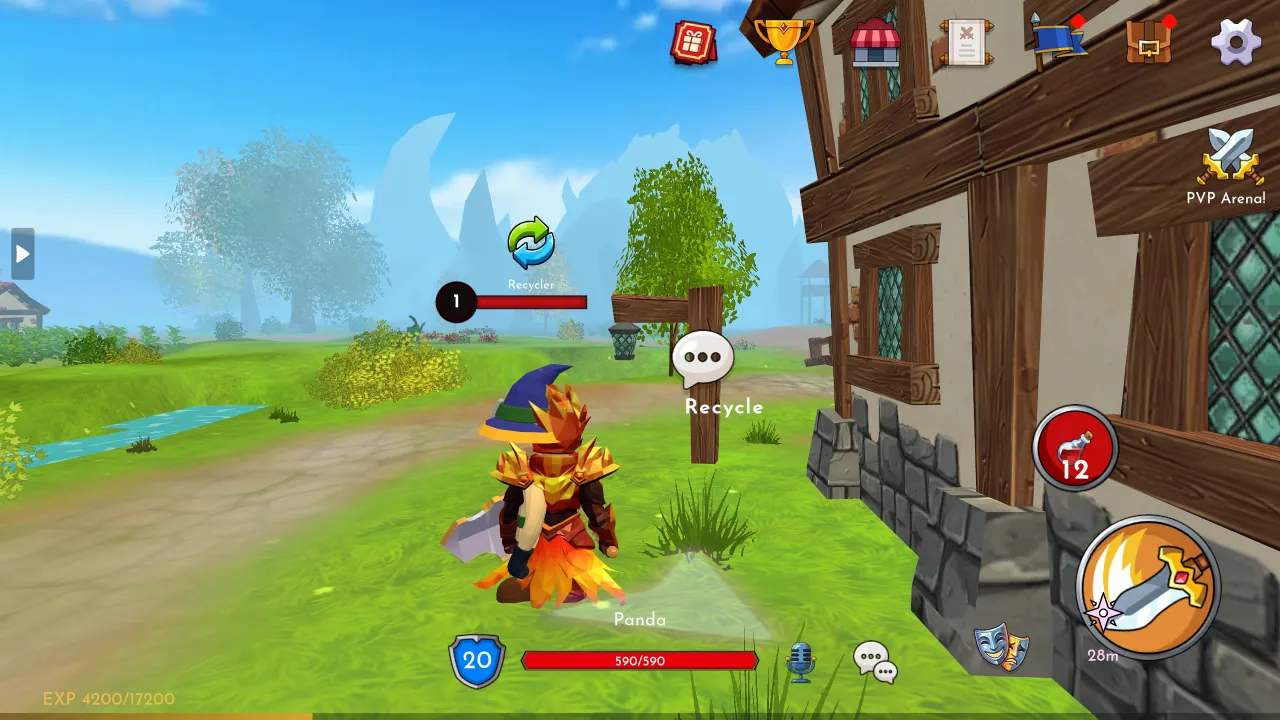
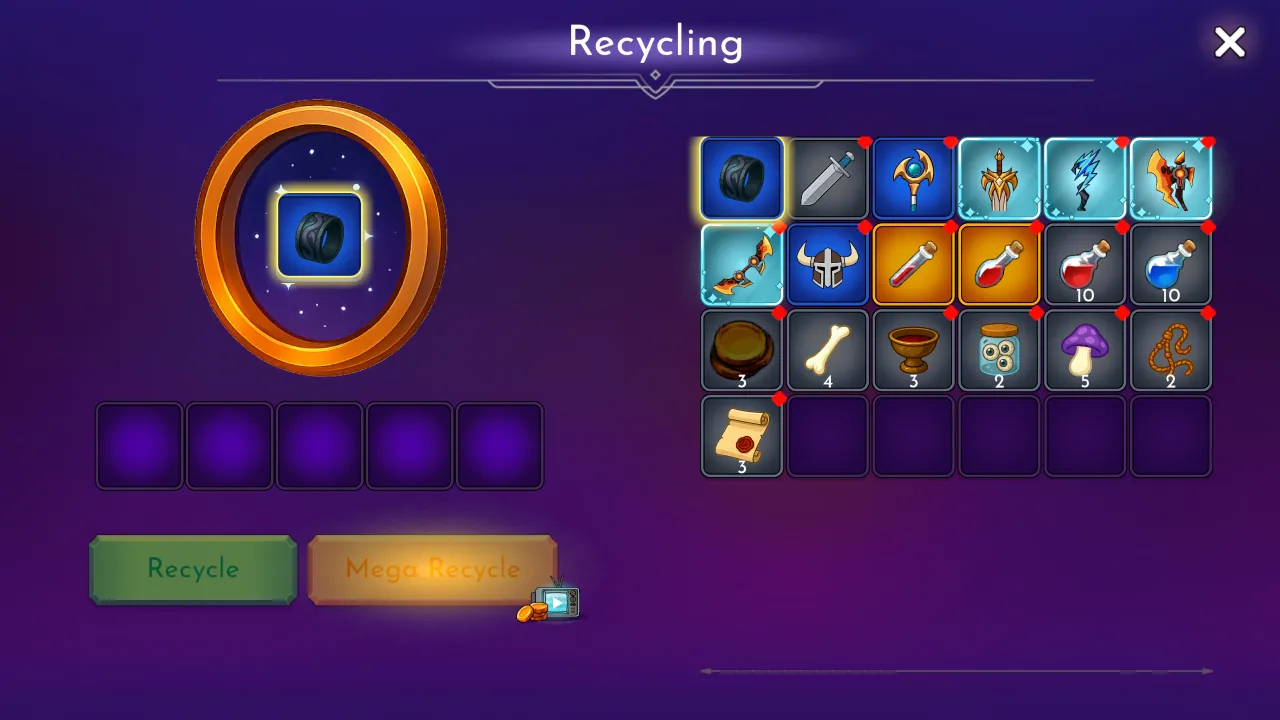
The Forest map has two Recyclers and the Desert map has one. Walk up and press Recycle. The Recycling window shows your bag next to an empty slot.
- Tap a weapon, armor, helmet, gloves, boots or ring. Nothing else can be recycled, junk and potions included.
- The window previews the materials you will get before anything happens.
- Press Recycle to break the item. It is gone for good, so check the preview first.
- Mega Recycle is an optional second button that doubles the materials.
What you get back
The Recycler starts from the item's value, the same number a Trader would pay. That value adds up the item's attributes, bonus health and mana and the damage or healing of its skill, plus a large bonus for rare grade and a larger one for legendary. The Recycler fills that value with junk, most valuable kinds first. Stronger items give more junk, and rare or legendary pieces give far more than common ones of the same level. A weak common item can be worth less than the cheapest junk. Then the preview stays empty and recycling it gives nothing.
Make room before you recycle. The item frees its own slot, but materials that don't fit in your bag are neither added nor dropped on the ground.
Spending junk at the Blacksmith
The Blacksmith is where junk gets used. Place a weapon, armor piece, helmet, gloves, boots or ring and choose the junk to feed into it. The success chance is shown before you confirm. It starts from a base value and rises with the Wisdom points you spent yourself (Wisdom from equipped gear does not count). It rises further the more forge worth your junk has compared with the item's value. A larger share of junk also makes a successful upgrade bigger and can sometimes raise the item's rarity.
Every attempt uses up all the junk you put in, whether it succeeds or not. A failed attempt either leaves the item as it was or breaks it, and each item can be sharpened only a limited number of times. So feed generous amounts of junk into gear you plan to keep instead of spreading it thin. Coins are never taken as material.
Why selling or burning junk is a waste
A Trader prices items by their stats. Junk has none, so a full stack sells for a token amount. The altars score offerings the same way, so burning junk barely moves the Junk Burned leaderboard. Despite the name, that board moves when you offer gear. The only good reason to hand junk to a Trader is a city quest that asks you to Sell bones or Sell books.
A simple routine
Keep junk in your bag as you hunt instead of selling it. When a new drop replaces a piece of equipment, take the old piece to the Recycler, not the Trader, if the gear you wear still has sharpenings left. Spend junk on that gear in large batches. If you are chasing the Burned board, save spare rare and legendary pieces for the altar. They score far more there than they would return as junk.
Recycling tasks
The Tasks window rewards recycling in five steps:
- Scrap Metal, recycle 1 item: 150 gold and a Rare Relic.
- Recycler Novice, recycle 5 items: 200 experience, 300 gold and 2 Rare Relics.
- Recycler Journeyman, recycle 15 items: 1000 experience, 1000 gold and a Rare Relic.
- Forge Cleaner, recycle 50 items: 1500 experience, 2000 gold and 3 Common Relics.
- Master Recycler, recycle 100 items: 5000 experience, 5000 gold and 2 Legendary Relics.